“My Feet Keep Dancing: Chic”
Drum, guitar bass
tight,
Dance groove rock
funk masters
Damned disco
label. -- 1977

R&B group
Chic was the brainchild of guitarist Nile Rodgers and
bassist
Bernard Edwards to put retro Hollywood chic style together with rock,
pop and funk rhythms on black vinyl.
Photo courtesy: Atlantic Records.
I heard the
single, “Dance Dance Dance (Yowsah, Yowsah, Yowsah)” by a group named Chic in
November of 1977. When I discovered the music of Nile Rodgers and Bernard
Edwards, it changed my life—I idolized them because there was no band like
Chic. I bought everything they released; it was a love affair that was
consummated and never abandoned. Why? Because I’d never heard music like
theirs—orchestrated, funky, rock-tinged and danceable. Not even after the nation collectively spewed
out its anger against ‘disco’ in Chicago’s Comiskey Park by burning vinyl disco
records did I stop buying music categorized as disco.
Disco sucked and
now it was dead. With its burial went the jobs of black songwriters, singers,
producers and musicians. Record labels folded and there went the jobs of record
promotional men, A&R men, radio on-air personalities, and even record label
secretaries. Nile Rodgers and Bernard Edwards with Billboard hit records and sold-out venues were stuck with the
albatross disco tag that affected their music, their finances, and threatened
their legacy.
As a black writer,
I too, was saddled with the ‘disco’ label. Although I covered more genres of
music than any other staff reporter, because of the disco tag, I lost my weekly
column and review space on the pages of Scene
Magazine. Other white male writers were able to move as popular music
evolved after 1979 when arena rock and New Wave became hot. The anti-disco
backlash was a bitch. So, Nile and Bernard’s fight was my fight—the battle not
to be labeled and to be free to write about whatever I wanted.
“There's a
subtle racism in the production end of the music business that says it's all
right for black acts to have white producers but resists the idea of white acts
having black producers.” – Richard Harrington, The Washington Post 1981
The same subtle
racism existed for black music journalists. Many of the acts I covered hit
their peak during end of the 70s and beginning of the 1980s. This is how I was
able to have a column and cover stories. But some of these acts like Donna
Summer, Gloria Gaynor, and Chic were labeled as disco acts. Little did I know,
record sales generated advertising dollars from labels; but content built a
publications’ reputation. The magazine I worked for rode the wave of disco for
a moment, but the tide turned. So before white rock critics and radio
personalities pulled the plug, I danced and had a good time. I didn’t know the
hammer was going to drop. Chic’s demise was emblematic of what happened to
black music—they were wiped out by disco backlash and the birth of a new genre
of music—Rap music.
Where white folks dressed up to go
to the opera or the symphony, in Cleveland, we hit I-271 South to Highland
Heights to the Front Row Theatre to see Chic. The pimp and his whores, the
gamblers, the mechanics, the students, the mothers, even the grandmothers—all
dressed up to see Chic because they all considered themselves to be unique. And
not since singer Barry White and his Love Unlimited Orchestra had black folks
danced to violins.
There
was a time when on every Sunday morning, I was coated in sweat, and cloaked in
anonymity as I gyrated in a crowded club—my church. The synchronicity of
strings and vocals rose to the depth of my soul. I thought these heavenly
sounds could heal whatever ailed me. I was never out of breath, my feet kept
dancing because it felt good dancing to the music of Chic and I knew the
worshippers on every club’s dance-floor felt the same way. Yet every time, no
matter how high they took me, I never got to say, ‘at last I am free’. —1978
Chic had one of
the best rhythm sections in popular music during this period—a heyday of
musicianship which saw the emergence of the black guitarist, bass player and
drummer. I was judged by what I reviewed
and whom I interviewed. I had to defend my hip by association shtick by deifying
the groups I believed in. That peer pressure battle which I lost in high school
certainly wasn’t going to defeat me again. I was a professional journalist who
grew as a writer right in front of the eyes of my family and friends who didn’t
understand what being on a magazine meant to me. Writing gave me an identity. I
didn’t really have peers because I didn’t know any black writers in Cleveland
and Jane Scott at the Cleveland Plain
Dealer was the only other female covering popular music. And I’ll leave
that alone for now. I cranked out three or four reviews a week, and my name was
slightly known around the region.
If I saw a guy or a girl on Coventry at Record
Revolution or the Record Exchange picking up their copy of Scene and they nodded or waved to me, I cringed. I felt a loss of
anonymity. Sure I wanted to be known, but not by being recognized, instead by
having people read my work. Most people thought ‘Charlotte Morgan’ was a white girl. Realizing that a short black
girl with thick glasses wrote the cover story of the region’s most popular music
organ was probably amusing. In this town we had a white woman covering rock and
roll for the Plain Dealer, Jane Scott. So no one was seemed surprised that
there was another girl in town writing about music. So the clerks at record
stores, bookstores, and magazines etc.—helped me do my job. It was okay if they
knew who I was.
My job required
looking for the next new sound and that meant hunting trips to local record
stores and magazine racks to find new artists.
Sometimes we went to the Music Grotto on 24th in Euclid,
Record Rendezvous which was in downtown Cleveland, or even Peaches which was on
the west side of town. We even went to
“The Pleasers”, a ghetto record store where the own got on a loud system and
scolded you if you weren’t buying records:
“Lookers and waiters can step outside.”
Along the way you
made friends who helped you with their recommendations. Mostly, it was the
psychic-like instinct that led me to music.
I almost missed it when I judged Chic by the cover of their first
album—the now classic shot of a white girl and a black girl, blowing whistles.
But everything always worked out for the good.
One of the people in my small network of resources worked for Atlantic
Records—the group’s label.
Craig Martin
worked at Record Revolution, a legendary Cleveland Heights record store on
Coventry Road. It’s where serious record collectors shopped for music. The
store sold vinyl records, and tapes; as well as music magazines. They also sold
bootleg recordings—domestic and imported ones. The bootleg was an unauthorized
recording of a band. Or unreleased studio recordings. Collectors loved to get
music that no one else owned. Collectors also loved to shop where they could
buy British and Japanese imports. Often labels released albums with different
track listings than on the American version and Record Revolution was a place
where kids could find these kinds of records wrapped beautifully in thick
plastic.
It was also a head
shop—you got your drug paraphernalia there too. I bought a carved wooden
jewelry box from the boutique to store my marijuana and Blanco and Negro
cigarette papers.
If Rolling Stone, CREEM, NME, or Melody Maker wrote about the act, it was
stocked in the bins at Record Revolution. These were some of the magazines of
record; their pages written by the music journalists I admired, no worshipped.
They were young white males who played god when they decided by banging the
keys on their typewriters, what was in and what was not.
“The
key to Chic's entrancing sound is Nile Rodgers ' guitar work and Rodgers
/Bernard Edwards' sweeping production. This team's devotion to detail was not
apparent on Chic's cliché-hit, “Dance, Dance, Dance (Yowsah, Yowsah, Yowsah),”
but with “I Want Your Love,” possibly Chic's greatest tune, Edwards &
Rodgers ' craftsmanship hit its stride. “I Want Your Love” is an auto-erotic
song produced with elegant touches -- cascading strings, Spectorish bells, a
percolating guitar -- so suggestive that it melts into ultra-chic porn.”
– Robert Hull, The Washington Post, 1978
The first floor of
the store on side featured the head shop and boutique merchandise; the other
side of the store had bins where rock and imports were showcased. There were
two display windows on that side of the store. There was a cash register on
that side and a staircase, which led to the basement where the cutouts were
sold. Cutouts were discounted albums and 12-inch singles. When you sold your
albums to the store, they wound up down in the basement bins. Many gems were
found down in the basement, which is why record collecting was time
consuming—there were lots of records to comb through. There was a cash register
down in the basement and it too sat on a glass case, which might display some
kind of collectible music set.
The store hired
kids who knew their music and each one had a personality that reflected their
tastes in music. They wore their idols on their chest—colorful t-shirts and
buttons. For example, Warren was into Parliament Funkadelic. Warren wore the
bands’ t-shirts and spoke in their rhetoric—‘that free yo’ mind and yo’ ass
will follow’ spiel. He probably used drugs because the band he idolized did.
Warren carried it too far to suit me. I may have idolized bands, but I didn’t
buy into anyone’s rhetoric. Clerks like Warren wanted you to know that they got
promotional material and he’d ask if you had any; like he was privileged or
something. This used to piss me off; made me not want to go into the store. But
when I went down the stairs to the basement, I heard some Funkadelic playing
which meant Warren was behind the cashier.
He was a thin
brown-skinned kid with glasses. Reminded me of a mole, but that’s not nice. But
he did. He was a musician I learned. He came up beside me while I flipped
through cutouts.
“You’re that
Charlotte Morgan from Scene? I knew you were black. Did you get the new
Funkadelic from Warner”, he asked?
“Yeah, I got it
Tuesday,” I replied. I never stopped looking for records.
“I got mine from the white Warner dude,” he’d
say.
“I got mine from work,” I replied. I was a
writer; I didn’t have to compete with Warren for product. It was one of the
perks of the job—getting free product.
“Yeah, I got the
“Hardcore Jollies” shirt and some other stuff,” he added.
So I stayed out of
the basement for a while because Warren got on my nerves. Shopping for records
was a job—not a hobby. And I didn’t get high to do it. I looked at product and
magazines to stay up on what was going on in the industry, not to see who was
hipper.
Anyway, back to
what made Record Revolution great--the store’s funky aesthetic appealed to
visiting musicians and record marketing staff. For musicians from New York, the
store reminded them of Greenwich Village—the whole of Coventry did in fact. The
Revolution took pride in their display windows. Record labels lobbied to get
their product in one of those four windows.
When bands came to
town, a record promotion person escorted them to a local store. This was an
incentive for the record store to push the artist and sale the product. Some
times, there were staged in-store events where the record buying public got an
autographed LP or better still, a photo with the artist. Radio stations not
only played the product, they sold spots on the air to promote the act and even
advertised the events to get people to come out, buy the record, and meet the
band.
As a result of
these in-store events, the high white walls in Record Revolution featured
hieroglyphics—signatures and drawings from some of the biggest names in rock
music. My visits to the store did not go unnoticed by other clerks. Craig was
another black kid who waited on me, guided me to music I might not otherwise be
interested in—that was his job. He didn’t annoy me like Warren. And I didn’t
realize he knew who I was. I took his word because he wore cool t-shirts and I
related to him—he loved all kinds of music and all the right music.
“Yeah, I like your
stuff,” he said as he rung up my purchase. I think he had on a Lou Reed
t-shirt. The register sat atop a glass case and was tan and the price appeared
in black squares with white block numerals. “Twelve dollars and twenty cents.”
“Thanks,” I
replied awkwardly. I had over twenty dollars worth of cutouts and a copy of Rolling Stone.
“You know I got a
gig with WEA (Warner-Elektra-Atlantic) doing shipping,” he said.
“Okay,” I replied.
“See ya’.”
“Come in Tuesday,
it’s new release day,” he informed.
I thought it was an odd conversation. However,
what I did not know was that Craig had a plan that would outlast even our
relationship. He wanted to send me boxes of albums and 12-inch singles. When I went back on Tuesday, he explained his
plan.
“You give me your
address and I’ll send you product and promotional stuff,” he promised.
“Sure,” I said.
Therefore, once or
twice a week, a brown UPS truck played Santa Claus and brought boxes of
records. Craig marked the shipments so that I knew which boxes to discreetly
bring back up to the store. I was so naïve that I never considered what he did
as criminal, I thought is was my job to find great music. I could never have
enough records.
What was great
about getting more music was getting all kinds of music. Craig didn’t send me
the R&B product; he sent me whatever was released that week. This began a
relationship with the label which benefited me in other ways. But more about
this later.
Although I got the
Chic’s 12-inch single from work, I got the Chic album from Craig first. It sat
in a slanted stack of several hundred records down in my basement—right next to
the entertainment center which housed my television and Technics turntable. I
amassed quite a collection. There was no organization to my work. I brought my
purchases home and placed them in the front of the stack with no care. I knew
this is how I missed the Chic LP.
Chic, disco's
technocrats of trance, have always been absorbingly danceable, if a bit too
bloodless and uptown. – Denny Thomson, Boston
Globe 1980
Part of my job
consisted of reading album covers. You found a lot of information on the back
of an album; details which you used to write the review. And during the disco era, producers were the stars.
Producers released projects, not groups. For example, French composer, Jacques
Morali’s Can’t Stop Production Company actually ‘cast’ the Village People like
you would cast a movie. And you recognized that producer’s sound. So when you
were in a club and you heard a song called, “I Love America”, and you looked
the song up in Billboard Magazine,
you discovered that it was an artist, Patrick Juvet, produced by Jacques
Morali. Every producer’s sound was distinct—Giorgio Moroder’s work with Donna
Summer, for example. I built a knowledge base by reading the backs of LPs.
The production credits
on the first Chic album featured names I knew—Luther Vandross, Robin Clark,
Alfa Anderson, and Diva Gray among others.
Production credits
made the world of difference to me as a music reviewer. When I saw the NYC crew
on an album, I bought it. The NYC crew consisted of New York singers I came to
know from reading album covers. They worked frequently with dance music
producers like Jacques Fred Petrus, Gregg Diamond and then Nile Rodgers and
Bernard Edwards. Later they would lend their voice and their style to rock acts
like Duran, Duran, Roxy Music, Robert Palmer, David Bowie, The Police, Talking
Heads and others. It was guaranteed that
if the music sucked, there would be that gospel chorale that turned me on and
inspired my momentary escapes from reality. So I made mental note of these
singers, many of whom never achieved individual success with the exception of
Luther Vandross. He helped put Chic and other productions on the chart with his
vocals. He was rarely however used as a front-man—because of his personal
appearance. But Luther got the last laugh.
In the disco era,
this was especially important. Most ‘groups’ were studio productions—there was
no real group per se. If the song was a hit in clubs and made it onto the Billboard Magazine charts, then the
producers scrambled to find singers to hit the road. I felt my job was to
glamorize the background singer when they were good and vilify them when they
wasted my time and my money. So I knew the great ones from the era—Jocelyn
Brown, Ullanda McCullough, Leroy Burgess, Fonzi Thorton, Michelle Cobbs,
Tawatha Agee, Roz Ryan, Cissy Houston, Ava Cherry, David Lasley, Melissa
Morgan, Lisa Fischer, and so many others.
The enigmatic cover for Chic’s self-titled
debut album threw me—it shouted ‘anonymous disco album’. During this era of music, the album cover
served as a signifier to the group’s discourse—you saw gay men on the cover,
you knew this was club music for that particular audience. Of course, the
Village People featured iconic gay male figures on their album and won the
heart of dancers of all types. But the Chic album cover typified what was wrong
with dance music. The cover masked the
potential of the band and nearly turned me off. The style of the group was nowhere to be
found on this album except for in the vocals. While appearing to be a studio
album—meaning there was no real band but a collection of session players
performing the music for hire—this was actually the birth of one of popular
music’s most ingenious groups. The
quality of the music caught my ear. I was encouraged by a black editor to write
about Chic.
In the spring of
1978, I sat in the living room of my editor Charles Thomas. We were in an
apartment on East 89th off Hough I believe. We met there on Sundays,
our meetings not at all as I imagined—they were juvenile. We sat around, ate
snacks, and talked about music—Charles had no vision for the magazine outside
of making himself a star. I brought high school journalism colleagues to the
magazine. My mistake.
I do not know where
Charles came from—but he knew of me from Scene
Magazine. Charles offered me a chance to write for the Cleveland Entertainer, another in the growing number of black music
magazines in the mold of L.A.’s Soul
Magazine. And because I loved seeing my name in print, I agreed to work for
free. And of course, it was a bad move on my part.
If you understood
the mentality of many black men in the industry, you would know that the pimp
schema—work for me for free mentality—was the norm. Many guys treated women in the
industry like dirt; I found this out by working with guys like Charles. My
talent was worth money and here I gave it away which doomed me. Wasn’t it bad
enough that I learned that reviewers were often given all kinds of gifts to
ensure a positive review, which I imagine translated into record sales? I
learned that jobs were held in the balance if reviews weren’t printed. Years
later I learned about all the graft sent my way which my editors never gave me.
My first inkling of these kinds of arrangements came from Charles had a deal
with Atlantic Records to buy advertisement in The Cleveland Entertainer if articles were published. He had a
telephone friendship with label publicist, Simo Doe. So I wrote about Chic.
The Entertainer
was a black and white magazine. Designed to be a monthly, the publication
featured a lot of doo-wop groups because Charles was really into male vocal
groups like The Dramatics, Harold Melvin and The Bluenotes, The
Temptations—groups whose time had passed by the late 70s. No one was eager to
cover these groups. Arguing with Charles about editorial content was a waste of
time—he had no ear. He knew nothing about what went on in the business. His
magazine went nowhere. But before I got canned, I wrote about Chic.
What I loved about
this first album was the fact that it featured some of my favorite background
singers. I wrote that the product was a high quality east coast production that
would yield another album down the
line. I hoped they would because I
enjoyed the featured strings on most tracks. Sure, there were other dance
producers who used strings, but not like this ‘group’ did. The strings played
the melody—that part you sung. And the strings played counter to the melody,
enhancing it. I adored this because I loved classical music; in fact I took a
class as kid at the old Supplementary Center in downtown Cleveland to study how
to deconstruct music. I was a black writer and at the time my editors did not
understand that I could write about all genres of music. My new editor Mark Holan
often called to give me an assignment. I was one of the few journalists would
could interview a 60s music legend like Brook Benton or a fledgling new rock or
pop star like Leo Kotke.
So the discovery
of the music of Nile Rodgers and Bernard Edwards in 1978 introduced to me to
two black men who changed the music industry—opened doors for blacks to produce
mainstream rock acts. The New York
musical duo became synonymous with the sound of the era—disco. However, musically speaking, they found the
label confining. Moreover, in the
politics of disco, unimaginative critics never admit they are wrong. And I
didn’t know of many black music critics except J. Randy Tarborelli and Steven
Ivory, both of Soul Magazine. They wrote about mostly R&B and not
dance music. So I had no lead in this area of writing. Whereas white male
writers from Rolling Stone wrote
passionately about rock music, you couldn’t find black writers who enjoyed
dance music. After Chic scored hits, then people jumped on the band wagon this
was clearly something much more highly evolved than mere feel good disco
music. And it required more than a
casual listen to grasp what was going on in the music.
I didn’t debate people about the music of
the disco era. You either got it or you didn’t. Everyone danced in some kind of
club, but not everyone danced in ‘discos’.
During the 1970s and early 80s, dancing was a drug, a means of escape
for people. The recording industry was
at its peak during this time selling millions of copies of vinyl records. And
the versatile duo of Nile Rodgers and Bernard Edwards made R&B and pop
music that you could dance to—that kept your feet dancing. Every Sunday morning, I was coated in sweat,
and cloaked in anonymity as I gyrated in a crowded club—my church. The synchronicity
of strings and vocals rose to the depth of my soul; I knew these heavenly
sounds could heal whatever ailed me. I was never out of breath, my feet kept
dancing because it felt good dancing to the music of Chic and I knew the
worshippers on every club’s dance-floor felt the same way. Yet every time, no
matter how high they took me, I never got free.
So I developed a ritual of listening to music
as much as possible. I played music
while I read because at this time, I had to read the trade publications and for
pleasure there were books by non-fiction writers which captured my attention. I
listened to music while I watched
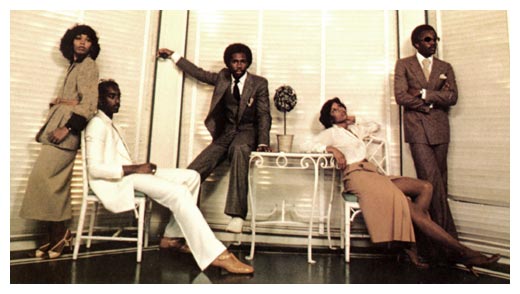
Photo Courtesy: Chictribute.com.
television to see if I felt
inspired. There was this feeling that over took me and transported me some
where other than my home. I recognized this power was in Nile Rodgers and
Bernard Edwards’ music. They had stumbled upon a formula for making music.
Their very chord changes were beautiful. This wasn’t your average black band.
Their music was crafted using the era’s best technology, to sound great on a
high-end system and to inspire you to have a good time dancing or listening.
Eventually, Rolling Stone wrote of
the send album, C”EST CHIC: “Chic are the disco band
to which rockers, soul fans and funkateers all give props, and for good reason:
Guitarist Nile Rodgers, bassist Bernard Edwards and drummer Tony Thompson
comprised one of the tightest and most influential rhythm sections of the last
thirty years.”. If imitation was the sincerest form of flattery, then
that explained why rock bands like Queen framed one of their biggest hits,
“Another Bites The Dust” on a bass line of Bernard Edwards. R&B groups like
Change (they were pretty faceless) blatantly copied Chic’s arrangements and
even had former Chic vocalist Luther Vandross to sing vocals on early LPs.
Their debut album
featured an instrumental entitled “Sao Paulo”, a smooth Bosa Nova number that
had nothing to do with “Dance Dance Dance”.
Then there was the album’s signature tune, “Est-ce que c’est Chic” which
asks the question, is it Chic? Honestly,
we didn’t know the answer. If it were not for the style—the sophistication—of
their arrangements, one would hardly know the same musicians penned the songs. However, I believe this was the point—to
initiate listeners to the versatility of Nile Rodgers and Bernard Edwards.
Our country was immersed in the disco culture.
The anti-sentiment is building towards the genre because it threatened
mainstream popular music—rock, pop and R&B. Everyone was forced to produce
and release ‘dance’ music. Even entertainers long renown for their work on
Broadway got into the act. The great Ethel Merman, star of stage and silver
screen released a ‘disco’ album. That put the nail in the coffin. Neil Bogart’s
Casablanca Records was home for singer and television star, Cher, who released
a hit ‘disco’ album and kept her career going. Yes, I frowned on the term
because the cultural connotations—this was music Blacks and gays danced to—was
inaccurate. Why? After the decade of the 70s ended, there remained a subculture
of club goers
New York’s Studio
54 was a cultural phenomenon—the world’s most famous church. The icons of
fashion, music, literature and art all made their way past the velvet rope into
the club where the music, booze, sex and drugs were god and the dancers were
all worshippers praised their way out of ordinary lives if only for the night.
The band Chic enjoys chart success but in New York, they are not given street
credibility. The story is, Nile and
Bernard went to Studio 54 on New Year’s Eve to attend a party for model Grace
Jones but they could not get in—their names were not on the guest list and no
one recognized them as the band “Chic”.
So they went home and write “Le Freak”.
It was the big hit off their second album, C’EST CHIC. And it was a
peak hour track that inspired DJs who knew dancers wanted the best music played
over and over during the peak hours—those hours that build the night towards
close. This is when the best anthems of era were spun. Now everyone knows who
Nile Rodgers and Bernard Edwards are.
The industry labels them as a disco act and their label, Atlantic
Records, does nothing about it.
I went clubbing most nights of the week to dance. I
loved to hear the music blared loud over superior sound systems. There was a
time when on every Sunday morning, I was coated in sweat, and cloaked in
anonymity as I gyrated in a crowded club—my church. The synchronicity of
strings and vocals rose to the depth of my soul. I thought these heavenly
sounds could heal whatever ailed me. I was never out of breath, my feet kept
dancing because it felt good dancing to the music of Chic and I knew the
worshippers on every club’s dance-floor felt the same way. Yet every time, no
matter how high they took me, I never got to say, ‘at last I am free’
The standout
guitar work of Nile Rodgers is stellar on every track on this second
album. We become familiar with his
slashing strumming style and his banjo slapping style. He flips from rhythm to lead with ease and I
cannot get enough of his guitar. Nile
becomes my favorite guitarist. By this
point, I cannot believe Bernard Edwards’ bubbly thick bass. I love when Nile and Bernard play syncopated
grooves like on “Chic Cheer”. “If you’re
ready for Chic, consider yourself unique”, the anthem goes. Clearly, everyone was ready.
Those
who hated disco music missed the beauty of the craft of analog record making.
While many of the era’s recordings sound horribly dated by today's' audio
standards, there are many that employed cutting edge technology and recordings
like those of Nile Rodgers and Bernard Edwards possess such a high quality that
they still sound good today. I listened
to “I Want Your Love” another great track from the C’EST CHIC album. Jose
Rossy’s tubular bells take the track to an elegant place rarely found in black
music. While orchestrated music was a
hallmark of the disco era, their music had soul coupled with style. I found the settling in of a music core
wonderful. There was Raymond Jones on Fender Rhodes piano and now Luci Martin
and Alfa Anderson on vocals. Diva Gray
and David Lasley are on background vocals.
Soon vocalists, Fonzi Thorton and Michelle Cobbs would become known as
part of the Chic vocal sound.
By 1979, the year
of some the greatest black music made, Chic drops its best album, Risqué and the hit single, “Good
Times”. With only seven tracks, time
wise, this is a short album. However,
there is enough time for the legend of Nile Rodgers and Bernard Edwards to be
cemented. Their concept of a stylish
black band in the mold of something retro and European is magnificently
presented in the song, “My Feet Keep Dancin’”.
Fonzi Thorton, Michelle Cobbs and Ullanda McCullough support the vocal
work of Luci Martin and Alfa Anderson in a soulful chorus. Nile takes his place as the rhythm guitarist
while Bernard almost plays lead with his bass and then there is the Tony
Thompson. He comprises the cornerstone
of this rhythm section. Thompson’s drums
are so well miked and so perfectly recorded that you cannot miss them in the
mix. As a child who grew up listening to
Buddy Rich, even getting excited when the “Ed Sullivan Show” featured Rich
doing his drum solos, I knew all about great drummers. I saw Billy Cobham,
Narada Michael Walden, Buddy Miles, Tyrone Lampkin, Tiki Fulwood, perform live
with their respective groups and I rated Thompson as one of the best. Why? Tony
Thompson was a great drummer who stayed and played right in the pocket—a phrase
I heard my father say on many an occasion of a good drummer. As the sustained keyboard chords climb coated
by the rhythmic strings, and led by Bernard Edwards’ bass, we know this is a
classic song. We know black music has
changed. When I first heard “My Feet
Keep Dancing”, I nearly cried at the songs’ perfection. Who were these young men? I wanted to hear this music performed live.
I
wanted to meet these guys because their music was so beautiful. I wanted to
meet them because they were black men who made music like they didn’t know they
should. This is how the game was played: If you reviewed the album, you got
dibs on seeing the show and getting an interview.
I
would have my opportunity to meet the band. And Charles Thomas didn’t help. I
reviewed their concert for Scene Magazine.
By 1980, they were
producing other acts like Sister Sledge, a girl group of sisters out of
Philadelphia. The single, “We Are
Family” was a hit on both the pop and R&B charts. They had many other
projects in the works at this point because the industry had begun to recognize
how talented they were as producers. I took my mother to the show with me. She
brought an orange juice container with vodka, juice, and ice. We poured short
drinks into Dixie cups throughout the show.
I remember sitting
in a dressing at the old Front Row Theatre on Wilson Mills Road. The band had sold out three performances and
they were high with the energy musicians have after a good show. As with most
of my interviews, I seemed unprepared. I
could never read enough or listen to the music enough before an interview. I always tried to ask what I wanted to know
believing it was what readers wanted to know.
I just wanted to know these people made such beautiful music.
I remember being
escorted backstage through a door past a rack of clothes. Chic was different in that they were always
dressed in high fashion. Seeing the
clothes on the rack, I was reminded of so many black and white films I
watched. Echoes of Bette Davis and
Katherine Hepburn came to mind. Theirs
was a well-crafted image that caused their fans to dress in after five wear for
their shows. Going to a Chic concert was
an event.
I found the
fellows to be as warm as friendly as their music. Vocalists, Luci Martin and Alfa Anderson
invited me into their dressing room to talk about clothes and touring. They were petite women who landed a job with
a band that exploded on the musical scene—they clearly had no idea Chic was
going to be so big. They were both kind
and sweet and willing to make friends with strangers on the road—they used
their gypsy discernment to figure out who was “cool” and who was not. However, as the work they created in New
York’s Power Station was released, it became clear to them that they were a part of something special.
I sat in the
lounge area of the Front Row taking photos with background singer Fonzi
Thorton. He and my mother were having
drinks and a good time. I met the
keyboard player Raymond Jones. We talked
into the wee hours of the morning. Soon
there was a small crowd around me as I told stories about my adventures at the
Front Row. Raymond and I are still
friends to this day. The photographer
from Scene Magazine came backstage finally to photograph me with Nile
and Bernard for my column. We started
our conversation with the obligatory discussion of their beginnings.
Before “Dance,
Dance, Dance” became a Chic hit they were just hanging around the city,
according to Bernard. The two had done a stint with New York City, a group that
had a hit “I'm Doing Fine Now” and subsequently goes to tour all over the world
with the group.
“What happened was
we were working around the city”, explained Edwards,” and some friends of mine
from New York City had this record but they did not have a band. They needed a
guitarist and a bass player. We toured with them from '72 to'75. We broke up in
'75 and Nile We wanted to start writing our own things but we could not do it
before because did not want to break up the band. So when it happened, it was
just me and Nile and I seriously started thinking about getting our own band.
“We met Tony
Thompson who was working with Labelle and he left them. He needed a go so the
three of us started doing club dates together. This was around '76 or '77. In
September of '77 is when “Dance, Dance, Dance” happened.”
It was hard for me to concentrate. They were so down
to earth, like guys I knew in high school. Nile
had a gap in his teeth, and his hands were so ordinary. I didn’t know why I stared at them.
had a gap in his teeth, and his hands were so ordinary. I didn’t know why I stared at them.
“We still had this dream of having strings and mixing
various forms of music”, Bernard, a funk fiend says. He cited James Brown as a major influence and
wanted to employ it. And Bernard’s funky
bass was in keeping with the era’s greatest bass players like Bootsy Collins,
Larry Graham, Stanley Clarke and Cordell Mosson of Parliament-Funkadelic.
“We worked for two
years playing gigs, talking about the concept of the group,” said Nile. “We wanted to be different but have mass
appeal at the same time. We did not want to come out wearing leather. We did not want that real funky image time
because we saw a lot of those groups were starting to fall on their faces. And
we certainly didn't want to be copycats.”
The duo took pride
in being like everyone else, but at the same time, they knew they were sitting
on something special even if it had not taken shape on record.
“Our first concept
was to do rock 'n' roll; we were trying to be a black rock 'n' roll band. This
was not accepted at the time so we stopped and went into disco. With that, we
changed our whole image. At the time, everybody was starting to dress up and be
fashion conscious again. They were not wearing jeans and t-shirts to concerts
anymore; they were wearing suits and ties.
So we thought if we could really catch on right away, we could ride the disco
movement if we create something special,” Nile said.
“We went to a lot
of the record companies with our ideas but we didn't have any money at the time
and nobody wanted to risk their money on us. So we took the money we made off
“Dance, Dance, Dance” and put together the band. And it was more expensive than we
thought. We hired something like 13
people--something unheard of for a new band.
We bought all the equipment and went out on the road,” Bernard said.
The
first lineup featured Norma Jean Wright, a vocalist from Elyria, Ohio. Alfa Anderson replaced Norma Jean and Fonzi
Thorton and Michele Cobb have replaced Luther Vandross. They had to replace on
string player and moved Luci Martin to lead vocalist.
Chic
was unique in that nobody knew what they looked like. This was in part due to the fact Nile and
Bernard were involved in a six-month legal battle over the rights to the name.
Kenny Lehman who appears on the first album playing woodwinds contends that he
has rights to the name. During this
time, vocalist Norma Jean leaves the band.
After
the legal hassles are straightened out, finally, Nile and Bernard are free to
make appearances and try out their concept.
The non-descript first album cover led fans of the music to wonder who was
in the band and what they looked like.
And they certainly disappointed no one. The second Chic
album, C'EST CHIC, proved that their idea worked. They posed a la a high fashion magazine and
people understood their concept. It did
not hurt that the great single, “Le Freak,” which sold something like four
million copies was such a great dance track.
The album itself sold two million copies. The second single, “I Want
Your Love”, also proved to be a million-seller. The album also continued what
is now their anthem; “Chic Cheer” spelled out what Chic expected from their
audiences. It gave the group lasting identity as well as their fans identity,
and it sets the perfect mood setter for their concerts: “If you don't mind
would you please get up out of your seat and repeat 'Chic, Chic'.”
People
attending their concerts know to chant the group's name after every song or
when they do something that particularly please them. They come to the shows
sporting the latest in fashion fare. Because they know, the group with a
self-imposed dress code is going to be stylishly dressed. The concept Nile and
Bernard had created was certainly quite catchy and is now prospering on its
own.
Between the second
and third album, Rodgers and Edwards got a chance to produce Sister Sledge.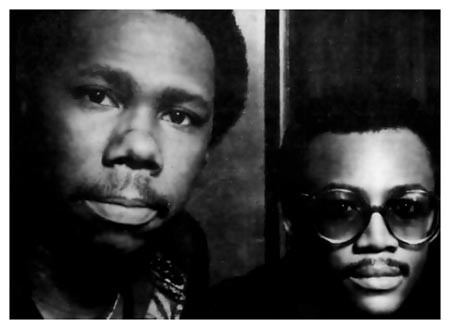
“We
wanted to show everybody we could take any group and make them a success just
by writing good songs for them and coming up with good music. Nobody wanted to
take us serious as songwriters/producers because felt our music was bubblegum.
We chose Sister Sledge because they were far from being a disco group,” explained
Rodgers.
“The Mick Ronson and Jimi
Hendrix influenced guitarist went on to say the concept for the album developed
as they went on. They wrote the title track, “We Are Family,” “He's The
Greatest Dancer” and “Lost In Music”.
“It
gives us more respect as songwriters if somebody else has a hit with one of our
songs,” Bernard added.
The
third Chic album was eagerly anticipated. It was supposed to be a double record
set but rising album costs foiled that idea. It finally arrived and was title
RISQUE. They call it a concept album.
“What we did for Chic and
Sister Sledge was to give them a concept and an image and a way to promote it.
With a murder mystery like--that sort of loose concept. We think of it as a
murder mystery like Agatha Christie book you know the movie, “Murder By
Death”--that's what we had in mind. So, on the cover you have the classic
characters, the butler, the made, and the forbidden lover. And when you look at
the songs' titles and you see' “My Forbidden Lover,” “Can't Stand To Love You”
and “When You Hear This Song Will You Cry?” you see that most of the songs are
about broken love and people getting hurt. It's risqué so that's why we named
the album such and that's why we have that kind of concept on the album cover,”
Bernard explained.
They
both reiterated that they do not go around making moral statements about life.
They just write lightweight commercial songs that will appeal to the mass
public. Their sole purpose is to make each album different but at the same time
contain something that appeals to everyone.
For
the first time they did not use their regular background vocalists Diva Grey
and Luther Vandross.
“We
changed the background vocalists because we wanted a fuller sound,” said
Bernard. “Plus the fact that Michele and Fonzi are really into the Chic things
and our group is like a family and you have to really be into the concept of
the group. Luther was with us from the beginning; we played on his solo albums
before Chic was formed. Alfa Anderson and Robin Clark, who sang on our first
LP, both used to sing with Luther. However, for the concept of Chic, Luther did
not fit. He is still our good friend but visually he did not fit the image of
the group. Michele and Fonzi did.”
“We
don't really worry about it. We included the lyrics this time with the album
because we feel there is a message there. We do write for women, and with women
singing the songs in mind. We got tired of dealing with men because it is more
acceptable for a women like Barbra Streisand to be singing a big ballad than a
man. We know the ladies are much more effective in getting a song across, so we
showcase them. When we were working with male singers, that ego thing would
come into play. They'd always try to sing louder than we played.”
They
do not have a pat system for writing songs.
“Sometimes
Bernard will already have the music and we write the words together. Or
sometimes I will have the song already written and we make a few changes. And
other times we sit down and write the words and music together. We do not have
a real system. Sometimes Bernard will call me up late at night and tell he has
some hip stuff or I'll call him,” said Rodgers.
Regardless
of how they do it someone will soon have to recognize their talents as writers
and producers. They will certainly add to their credibility when they produce
Diana Ross' next LP.
“We
wanted to go after somebody big to show everyone that we can write hit material
for different artists. That is why we went after Diana Ross. The direction will
be a commercial sound and success.”
Other
upcoming projects include the next Norma Jean album. Norma is a singer who was originally from
Elyria, Ohio.
“The
last time,” said Nile, “we just wrote the songs and produced it; this time
we've already mapped out the promotional plans and everything. She won't be out
on her own this time.”
I
wondered what the next single off the current album would be and was told “My
Feet Keep Dancing” would be it.
“We'll
probably be including that in the new show and we're all learning how to tape
dance. We'll probably work out a feature spot for vocalist Luci Martin who is a
serious dancer,” said Rodgers.
Nile
went on to explain how they came up with the idea of having tap dancer come in
and do the break.
“At
first we wanted to have millions of them. It was going to a Busby Berkeley type
number. But it was not' possible so we got one of the guys who used to be on
the “Our Gang” show, one of the Nicholas brothers and a guy by the name of
Sammy Warrant. We don't start out with these ideas but they come up if we feel
the song needs it.”
By the time of my
interview with the fellows, they were making all the right decisions and the
proof was in the ticket and record sales.
However, the day that the Sugar Hill Gang released “Rappers’ Delight” no
one could have predicted that it would be the death knell for Chic. Taking the instrument track from the hit
“Good Times” and rapping over it was the formula for the first hit Rap
single. Soon, other musicians found
themselves being sampled—and without their consent. Cheaper production costs, new record formats,
and the end of the disco era soon followed.
Chic was obsolete.
However,
history proved that they were talented producers and songwriters. Before his death in 1996 from complications
with pneumonia, Bernard Edwards was back on the road with Chic. He was celebrated along with his partner Nile
Rodgers as the 80s and early 90s most influential musicians because their work
with Diana Ross, Robert Palmer, Duran Duran, Madonna, the Power Station,
Southside Johnny, Missing Persons, ABC, Jody Watley, Nona Hendryx, INXS, Mick
Jagger, Hall & Oates, Jeff Beck, the Thompson Twins, Sheena Easton, and so many others.
After
the demise of the group Chic, their latter albums were weak—slowed down in
tempo and missing the classic style and sophistication earlier recordings
featured. Bernard was singing too much
and the lyrics were insipid. I never
understood how they got so bad so quickly, but it happened.
Theirs
was simply some of the most beautiful dance music made. Never has black music seen such
sophistication and probably will never experience anything like Chic.

